
Smoking in the Woods
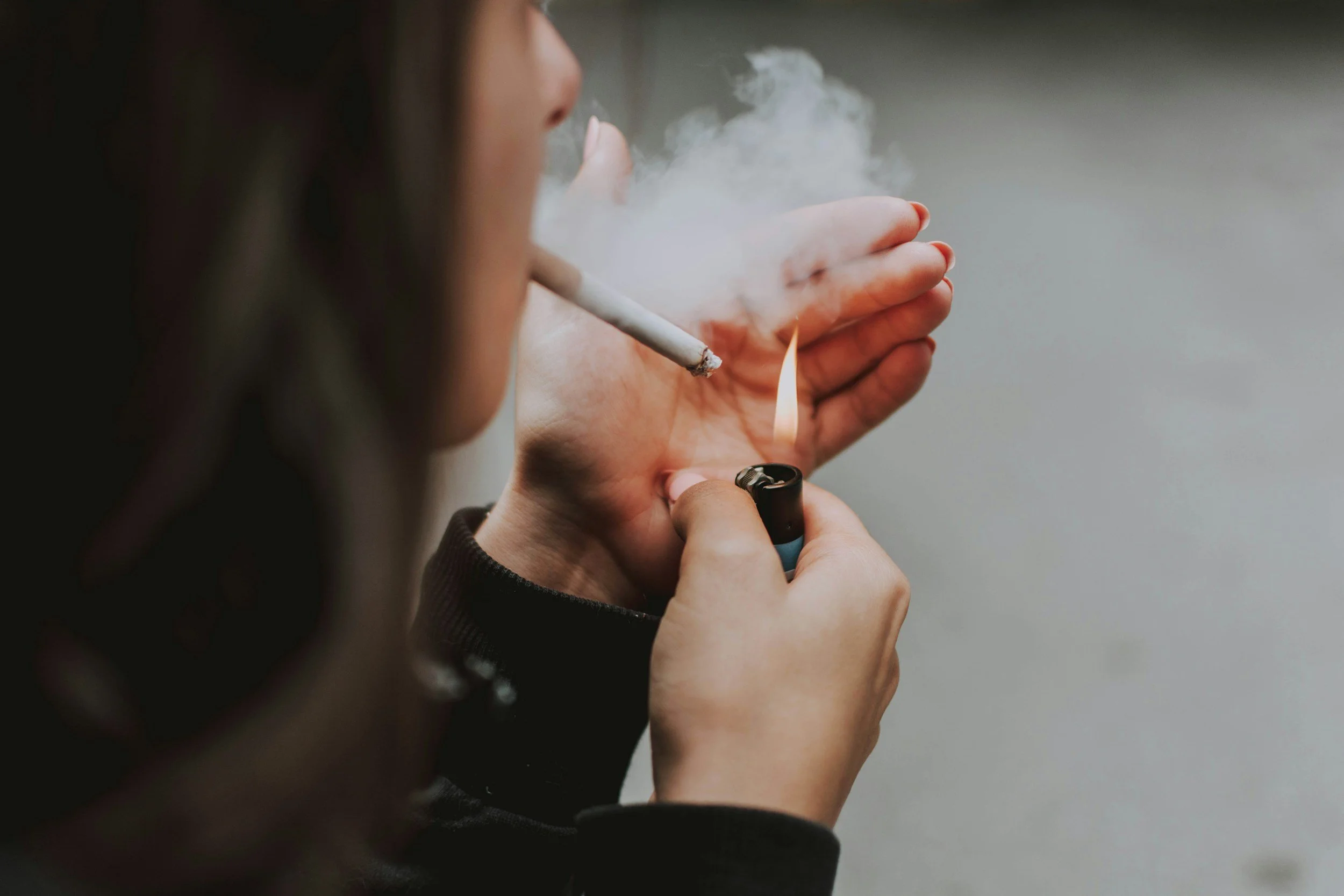
I was in the sixth grade.
I didn’t know I wanted to smoke until just that minute.
The ground had that springy, soft bounce of many seasons of leaves that kept the dirt perpetually wet. We were in the woods, though it was really just a half-acre of yet undeveloped suburbia, and I could feel a growing nervous icicle growing upwards in my stomach as the three of us stood staring at the boy casually opening the stolen pack of cigarettes in his hands.
This boy raises himself, swiping cigarettes is easy in a house with absent parents. I see this as freedom. I am not allowed in his house, ever. My mother won’t give a reason why. “Just don’t,” she says. I feel restricted by mom’s rules, her curfews. I consider these problems because I am eleven.
Next to me is my long-time best friend, more because of geographical convenience. I feel restricted by her, too. She is organized and gets good grades. She is thin and quiet, perfect. I am a mess. Chubby, noisy, painfully mediocre in school, sloppy. And because we have spent so much of our young childhood standing next to each other, we have always been compared. I have leaned into this to cope. Not as smart, but wacky! Not as thin, but watch me dance! Not as good, but did I already say wacky? But that was before the bad kid in the neighborhood introduced me to a new coping skill by busting out Pall Mall Extra Stales, and I grabbed that baby the minute it was handed to me.
I loved smoking from that moment, but I had a wave of hostility at my friend’s resistance to peer pressure. I wanted her to want to be bad like me, and she never was. I resented that her perfection, again, made me feel even messier standing next to her. And even worse, she would pretend, just enough to save face but not enough to put a dent in her flawlessness. She’ll hide behind me, I’ll make jokes, be a distraction. I know this because I have known her since we were five. And she’s been perfect since then.
It never occurred to me until I looked back on this story that my grab for that nicotine as a lean into self-medication was the flip side to my friend’s tight grip of control. I never saw her neatly pressed clothes and carefully arranged items on her dresser as bids to soothe the anxiety of her lonely home life, the rigid order as a reaction to the anxious nervousness in her family. I had been in her house, with the cold tile floors and marble countertops. Her parents’ marriage was one long passive-aggressive stalemate. When she was at my house, with three kids and jelly on the coffee table, she would put her feet up and leave her dishes out. This felt condescending since there was always a ‘Mom With A Migraine’ sleeping somewhere at her house, so you had to be quiet. Now I think the sticky, loud chaos was a relief from the pressure of the angry silence of parents who hated each other. This was how she described them, even at eleven, even as she rearranged her legions of stuffed animals in neat piles on her canopy bed, fit for a princess. A perfect, perfect princess. And here I thought it was because she didn’t want me to look cool.
I never saw us as reacting to the same pressures, home life, growing up, and wondering why we’re not allowed in the bad kid’s house. I was eleven. And so I thought she was standing between me and looking cool. I thought everything was about me. And I regret that I was hostile and judgmental when I could have been understanding. But I looked cool. Very, very cool.
The thing of it is how it shaped me, this feeling I had, standing next to someone who made me feel damaged. She was what smart looked like. She was who you had to be to deserve praise from teachers, parents, and everyone who mattered. And because we were salt-and-pepper-shakered together so young, I didn’t know anything else but that I was the other one, the one who got in trouble, the undeserving one. And I formed my identity around this. I had to act like it didn’t hurt, it didn’t matter, like being smart and good wasn’t a thing I cared about, and basking in the warm glow of approval wasn’t what I craved. Those were her things, her world, and I didn’t fit in it any more than I fit in her jeans.
So I became gregarious and noisy, and I hid inside books. I overcompensated socially. I didn’t see success as possible, so I focused on being liked. These things served me as far as defense mechanisms go. If you’re not making jokes through uncomfortable situations, what are you even doing? Writing was an outlet for the frustration I tried to articulate with the vocabulary I built through reading. My creativity may have been the reservoir my failed intelligence wandered over to when it got bruised by medium-sized grades or an hour watching my fat body in a leotard next to all the skinny ones in the mirror at dance class. I played piano and sang in the church choir. The same teachers who were dismissive and apathetic toward me as a student noticed me in school plays.
I have always felt pulled to the arts. But I wonder, would I have jumped so fully into that world if I had not felt so completely cast out of academia, traditional prettiness, and behavioral lady-like-ness because I lived around the corner from a perfect girl when I was four years old and became a bookend? And would my friend have been organically perfect if she had not lived in the chill of her parents’ marriage, a house with perpetually drawn curtains and dinners in silence? Did she hide in schoolwork as I did in books? Would she have forgotten homework, gotten in trouble, and smoked heartily in the woods with me that day if she had the freedom to be who she was and not who she had to be to survive?
I feel bad for us both, we were just eleven for god’s sake. And I guess this is the story of us all, navigating what we were given, what we are stuck with, and how we figure it out. Maybe that’s why we go to the woods and smoke in the first place.