
Peak Lynch
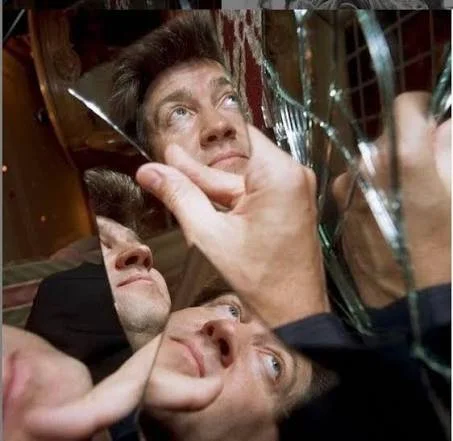
I had been writing since childhood, struggling with waxing and waning creative energy, drained by pleaser impulses, inner critic voices, overextending relationships,
and the judgment I ladled on top of it like gravy for the impact it had on my art.
I send a weekly newsletter about writing, creativity, and making space between who we are and who we tell ourselves we are. This week was about artist David Lynch and how he used transcendental meditation to give him space to hear his voice, even when it made no sense, even when it went against what everyone else was doing.
Back then, I defaulted to a lack of talent when I couldn’t produce amazing writing because the judgment noise was so loud that when I tried to push it out of the way, it acted like a more talented writer wouldn’t have to do that; a better writer would simply be a better writer. So, I was letting myself off the hook too easily by letting myself off the hook too easily. You’ll be relieved to know I started therapy around this time.
But by my early 20s, I had gotten to a place where I wrote often and filled a few books. I had not yet connected writing output to energy, that the noise in my head could affect how much I wrote, could close the distance between desire and action, could change what actually hit the page and open the channels. I wouldn’t get there for a while. For now I was a walking contradiction - smart but second-guessing, independent but dating controlling doofuses, creative but needlessly blocked by noisy brain voices. Basically, a busy NYC gal on the go with one of those little tiny early 90’s backpacks, for those who remember and long for simpler, tinier times.
Many a late-night marathon of Twin Peaks on Bravo ran relentlessly in the background of my studio apartment back then, its eerie brilliance washing over me in complete darkness but for a few candles. If you are unfamiliar, it was a TV series, the chaotic brain-child of artist, photographer, filmmaker, and all-around adorable weirdo David Lynch. It opens with the murder of high school student Laura Palmer, and the mystery around her death unravels from there. It’s a strange, surreal, beautiful show peppered with demons, prophetic dreams, people communicating with wooden logs, and an impossibly twisty plotline.
Then came the day during filming when Lynch overheard someone speaking to set dresser Frank Silva. They were designing Laura Palmer’s bedroom, and Lynch saw something. He just saw something in his mind. He asked Silva to step into the room. He did two slow pans with his camera with him in the scene. For no reason. He didn’t know why. He just wanted him in that room.
In that moment, the inside of my head would have sounded like this:
everyoneisgoingtobemad
dontmakeabigdealoutofnothing
itwasntagoodideaanyway
itstoomuchtrouble
dontworry
forgetitforgetitforgetit
But David “Noiseless” Lynch? He just grabbed the camera and lights, and took the time and resources and shot these shots. Because.
Later that day, shooting a scene with the distraught mother, she was directed to lie down on a couch, and then to bolt upright and scream. The camera guy said that Silva had been standing behind Lynch and was reflected in the mirror, the one over the couch. It ruined the shot. It was a mistake.
But not for Lynch. For Lynch, this moment was the birth of a crucial character, the next pages of the script, right then and there. Whatever nudged that first inkling earlier in the day suddenly poked again when Silva showed up in the mirror. He knew he had something, and he did not ignore it. He said, “Frank, are you an actor?” Silva was working on the show as a set dresser, but this was Los Angeles. He had a copy of his headshot in the car.
So here we have David Lynch creating a pivotal plot point mid-shoot, confidently throwing his full body weight into the creative unknown based on feelings, impulses, ideas, things that come to him in a moment. Meanwhile I’m sitting by the East River and looking at my notebook, mad that my narrow perception of what I should be writing isn’t coming. I want all or nothing, and so I get nothing. Maybe that’s why Fox passed on my sitcom, Tiny Backpack Clapback.
Lynch was a lifelong practitioner of Transcendental Meditation. He likened it to going deep down in the ocean where it’s quiet, where the big fish are, the big ideas. This is something he used to quiet the noise - that noise that might have said, “David, the network gave us a two million dollar budget, and you’re going to bring the guy from the crew in here?” Lynch had deadlines, and pressures, and a cast of movie stars waiting for him. And yet, he stepped into his vision and followed it, despite not knowing how it would end. This is fearless creation. This is focus, knowing who you are and what you want. This is what you get in the quiet, in the space between you and the noise.
David Lynch left behind a huge body of creative work, and you may not like any of it. But what makes David Lynch David Lynch is not his work; it’s his faith in his work, his faith in his voice. His voice over the noise.
Because his voice is his genius, just as your voice is yours.